

What are Automatic Fuses? Electrical fuses are safety elements used to protect the system by cutting off the energy in case of abnormal current that may occur in a circuit. They do not interfere with the circuit under normal operating conditions; However, when the current exceeds the specified limits, they prevent larger malfunctions by automatically opening the circuit.
Short circuits, overloads or faulty connections occurring in electrical installations; It can lead to serious consequences such as fire, equipment damage and long-term power outages. Automatic fuses control these risks and ensure the safe operation of the system.
Considering today’s increasing energy consumption and more complex electrical infrastructures, a correctly selected electrical insurance is no longer a choice, but a necessity.
Automatic fuses, technically known as miniature circuit breakers (MCB)is one of the most commonly used fuse types in electrical installations. It automatically opens the circuit in case of overcurrent and short circuit and can be used again after the fault is eliminated.
Thanks to these features, automatic fuses provide ease of maintenance and contribute to the more sustainable operation of electrical systems. It has a wide range of uses, from home and office applications to industrial facilities.
In every electrical installation, protection devices are designed with a simple objective: to disconnect faulty sections before damage spreads to the rest of the system. While conductors and loads are selected according to their current-carrying capacity, unexpected conditions such as insulation breakdown or excessive loading may push the system beyond its thermal limits. Without proper protection, even a minor abnormality can escalate into a major failure within seconds.
The principle behind fuse protection is closely related to the thermal behavior of conductors. When current flows through a cable, heat is generated according to the I²R law. If the current exceeds the rated value for a prolonged period, the conductor temperature rises beyond its insulation class limits. Automatic fuses are designed to interrupt the circuit before this temperature rise causes permanent insulation damage or mechanical deformation of conductors.
Automatic fuses work with two basic protection mechanisms against different types of risks that may occur in electrical systems: Unlike traditional cartridge fuses that must be replaced after operation, miniature circuit breakers are equipped with internal switching mechanisms that allow them to be reset once the fault condition is cleared. This feature reduces downtime and maintenance costs, especially in commercial and industrial environments where rapid restoration of power is essential. Additionally, their modular structure enables easy integration into distribution boards.
Automatic fuses respond differently depending on the nature of the fault. An overload condition typically develops gradually, often due to excessive connected loads or mechanical issues in equipment. Short circuits, on the other hand, occur suddenly and involve very high fault currents within milliseconds. For this reason, modern MCBs incorporate separate protection principles to address both slow-developing thermal overloads and instantaneous short-circuit events.
Magnetic Protection | Fast Response to Short Circuit
In sudden and high current situations such as short circuits, the magnetic mechanism is activated. When the current exceeds the specified threshold value, an electromagnetic effect occurs and the fuse opens the circuit in a very short time. This quick response prevents damage to cables and connected equipment.
The thermal protection element inside an MCB generally consists of a bimetal strip. As current increases beyond the rated value, the strip heats up and bends due to the different expansion coefficients of the bonded metals. This mechanical movement eventually triggers the opening mechanism. Since heating takes time, this element provides inverse-time characteristics, allowing temporary inrush currents without unnecessary tripping.
The magnetic protection element, in contrast, operates almost instantaneously. In the event of a short circuit, the sudden high current creates a strong magnetic field in the coil inside the breaker. This magnetic force directly actuates the tripping mechanism, disconnecting the circuit within milliseconds. The combination of these two systems ensures both sensitivity and selectivity.
Thermal Protection | Safety Against Overload
In case of long-term overcurrents, the thermal mechanism works. The bimetal structure inside the fuse expands due to increase in temperature and opens the circuit after a certain period of time. This system plays a critical role in ensuring safety, especially on lines operating under constant load.
In residential installations, automatic fuses are typically selected according to lighting, socket, or appliance circuits, each with different rated current values. In industrial applications, however, breaker selection requires consideration of factors such as motor starting currents, cable length, ambient temperature, and coordination with upstream protection devices. Incorrect selection may result either in nuisance tripping or insufficient protection.
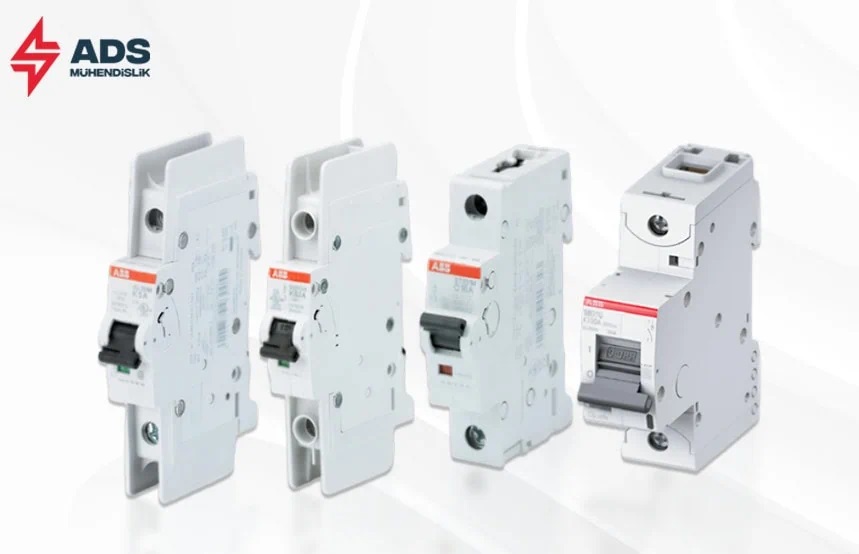
MCBs offer many important advantages in modern electrical systems:
► Provides fast and reliable protection in cases of overcurrent and short circuit
► Reduces maintenance and operating costs thanks to its reusable structure
► Offers various current and characteristic options for different applications
► Extends the life of electrical installations and connected devices
These features make automatic fuses indispensable for both individual and industrial applications.
Choosing the correct automatic fuse is critical to the safety of the electrical system. An incorrectly selected fuse may not adequately fulfill its protection duty or may cause unnecessary power outages.
The following technical criteria should be taken into account during selection:
► Rated Current: Must be suitable for the normal operating current of the circuit
► Number of Poles: Must be determined according to single-phase or three-phase systems
► Short Circuit Breaking Capacity: It must be able to safely handle possible short circuit currents.
► Opening Characteristic: Must be suitable for the type of connected load (lighting, motor, inductive loads, etc.)
Correct evaluation of these criteria is decisive for both system security and long-term operating performance.
MCBs are classified for different applications according to their tripping characteristics:
B Type Automatic Fuses
It trips at 3-5 times the rated current. It is used in applications that draw low instantaneous current such as lighting and socket circuits.
Type C Automatic Fuses
It trips at 5–10 times the rated current. It is suitable for commercial and light industrial applications with motorized and inductive loads.
D Type Automatic Fuses
It tolerates up to 10–20 times rated current. It is preferred in industrial motors and special equipment that draw high starting current.
When it comes to electrical safety, product quality and compliance with standards are of great importance. ABB automatic fuses are widely preferred around the world for their high short-circuit breaking capacity, mechanical durability and long-lasting structure. ABB electrification solutions; When taken together with automatic fuses, switchgear products and distribution equipment, it creates a consistent and reliable protection structure in electrical systems.
ADS Engineering, ABB electrification partner integrates automatic fuses and electrical insurance solutions into projects with a technical engineering approach. Correct product selection, correct configuration and application integrity in electrical infrastructures; are the determining factors in terms of system security.
ABB automatic fusesWhen evaluated together with ADS Engineering’s technical knowledge; offers reliable and sustainable solutions in residential, commercial and industrial projects.
As electrical infrastructures become more complex, proper coordination between protective devices gains increasing importance. Automatic fuses are often used together with residual current devices (RCDs) and molded case circuit breakers (MCCBs) to create a layered protection strategy. This coordinated approach enhances both operational reliability and personnel safety, ensuring that faults are cleared at the appropriate level without affecting the entire installation.