

Many solutions have been developed that offer different advantages in web technologies, and React has managed to stand out among these solutions. When the advantages of React technology are positioned correctly, it can be shown as a successful example for users and developers in developing purposeful and effective websites.
The performance advantage does not come from “being virtual” alone. The real strength lies in React’s reconciliation algorithm. When state changes, React creates a new virtual tree and compares it with the previous one using a diffing strategy optimized for predictable UI structures. Instead of scanning the entire real DOM, it assumes that elements of the same type produce similar subtrees and that developers use stable keys for list items. These assumptions reduce computational complexity dramatically. If keys are misused or unstable, however, unnecessary re-renders occur and the performance gain quickly disappears. In large data-driven interfaces, proper key management is not optional—it directly affects rendering cost.
In today’s digital environment, web page speed is very important. We live in a time where we have every advantage the web has to offer at our fingertips. For this reason, many solutions have been developed that offer different advantages in web technologies, and React has managed to stand out among these solutions.
It is a JavaScript library used to develop user interfaces based on React.
So, what are the main features that distinguish React from other technologies??
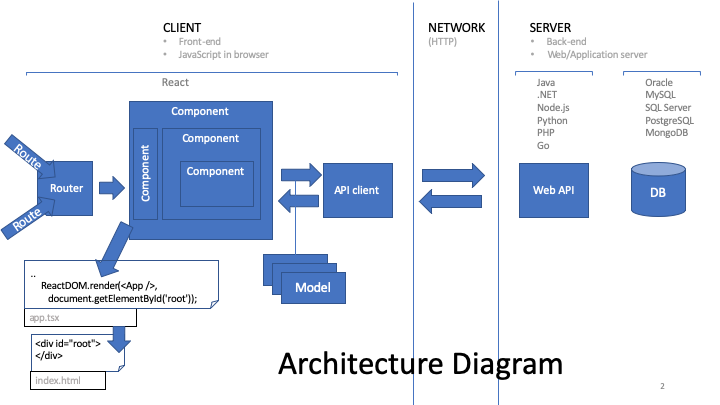
Component structure is not just about reusability; it is about state isolation and controlled data flow. In well-designed React applications, data typically flows downward through props, while state is lifted only when necessary. This predictable unidirectional flow reduces side effects and makes debugging easier. But there is a trade-off. If state is lifted too high in the hierarchy, even small updates can trigger wide render cascades. This is where memoization techniques such as React.memo, useMemo, and useCallback become practical tools rather than theoretical optimizations. Used correctly, they prevent unnecessary render cycles. Used blindly, they add complexity without measurable benefit.
High Performance with Virtual DOM
Component-Based Architecture
Interfaces are developed by breaking them into small and reusable parts. This structure both increases readability and simplifies the maintenance process.
Bundle size and build configuration also influence real-world React performance. A poorly optimized production build with unnecessary dependencies can offset the gains provided by the Virtual DOM. Tree shaking, code splitting, and lazy loading reduce initial load time significantly, especially for large-scale applications. Serving smaller JavaScript payloads decreases parse and execution time in the browser. React itself is efficient, but the surrounding ecosystem determines how fast users actually experience the application. Performance, in practice, is the sum of architecture, build strategy, and runtime behavior.
Broad Ecosystem and Community Support
 Thanks to React’s large and active developer community, abundant educational materials, blogs in all languages, and official documentation, the React ecosystem is constantly growing, providing a rich pool of resources for both beginners and experienced developers.
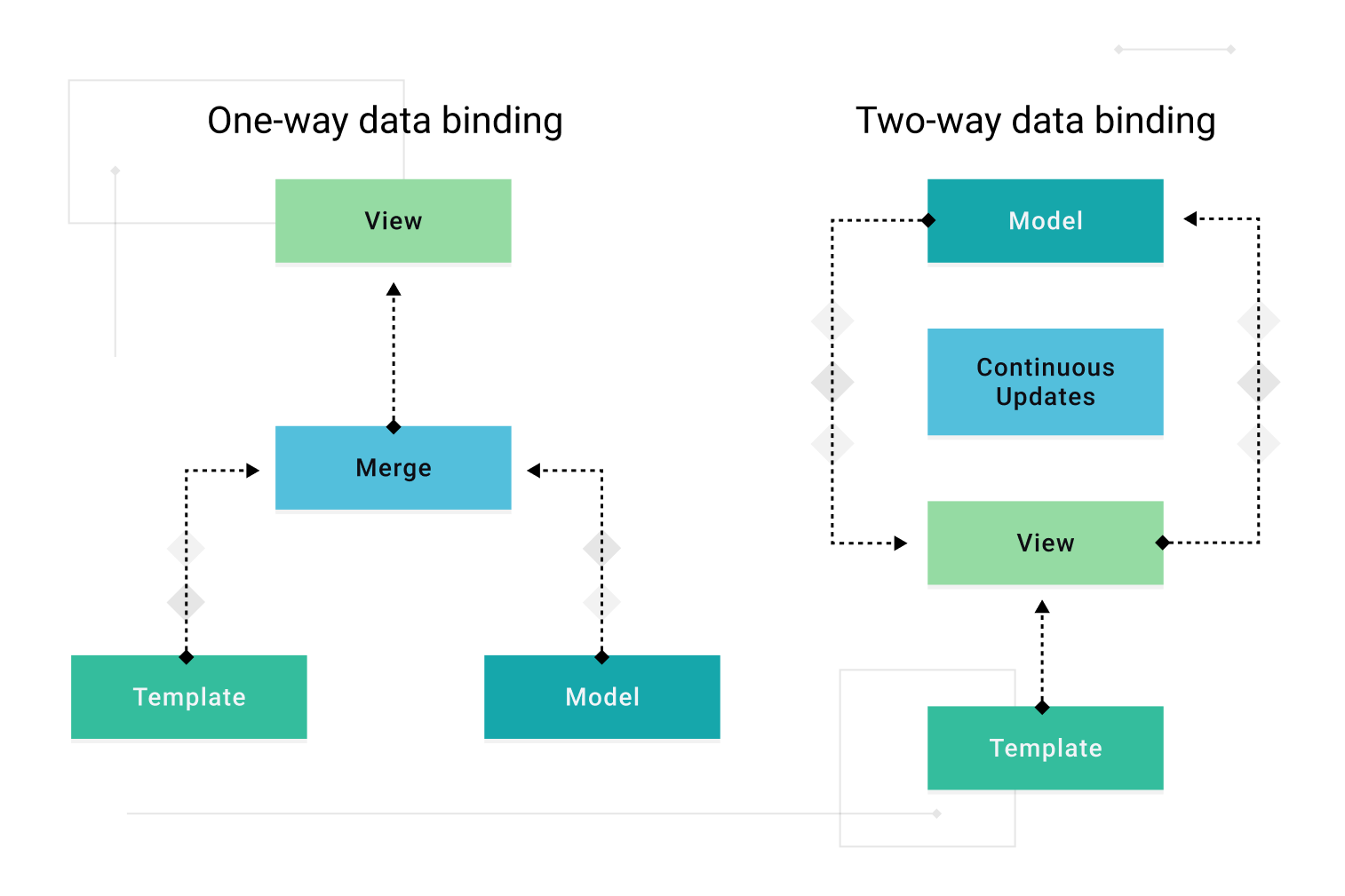
One-Way Data Binding
One-way data flow is a system in which data flows only from one side to the other. In React, this means that changes made to the data are automatically reflected on the screen. However, changes made on the screen do not directly affect the data. Therefore, this structure is called ‘one-way data binding’.
When the advantages of React technology are positioned correctly, it can be shown as a successful example for users and developers in developing purposeful and effective websites. Nowadays, there are other technologies such as React that effectively play to their strengths. It is inevitable that new technologies and different advantages will emerge in the coming years.