

Despite the rapid increase in demand for electrical energy, electricity production, transmission and distribution infrastructure cannot develop at the same pace. This situation has led to an increase in the incidence of power quality problems in electrical networks. Developing technology has also led to changes in load characteristics. Although microprocessor and semiconductor-based loads are among the load types affected by power quality problems, they are also the source of many power quality problems.
Unlike conventional capacitor bank systems that switch in discrete steps, a Static Var Generator operates with fast IGBT-based converters capable of producing continuously variable reactive current. This means compensation is not limited to predefined kvar stages. The device measures load conditions in real time and injects leading or lagging reactive current within milliseconds. In rapidly changing load environments—such as welding lines, elevators, or crane systems—this dynamic response prevents momentary power factor drops that classical contactor-based systems cannot correct quickly enough. The result is a smoother grid interaction and more stable voltage profile.
Power quality can be defined as a set of electrical parameters and limits that ensure that end-user loads or equipment connected to the electrical grid operate as desired without experiencing significant performance and life loss. Deviation of voltage or current from ideal value is defined as power quality disturbance. According to the IEEE definition, power quality is the concept of properly powering and grounding sensitive equipment for its operation.
Cost of Power Quality Problems
Another critical distinction lies in transient performance. Mechanical switching in traditional compensation panels can generate switching transients and inrush currents, especially when capacitor banks are energized under residual voltage conditions. These events may stress contactors and create additional disturbances in sensitive installations. SVG systems, being fully electronic, avoid mechanical wear and reduce transient overvoltage risks. Over time, this lowers maintenance frequency and improves long-term reliability, particularly in facilities operating 24/7.
► Energy Efficiency Losses: Power quality problems reduce energy efficiency by increasing losses. This will increase the energy costs of businesses and cause more energy consumption.► Production Loss: Insufficient power quality causes production lines to stop or productivity to decrease in industrial facilities, resulting in losses in the productivity of businesses.
► Raw Material Loss: Decreasing or faulty quality of the material used in production and produced due to power quality problem, raw material costs, labor costs involved in production, extra labor required to compensate for lost production, etc. Contains.
► Personnel cost: It is the cost resulting from personnel becoming inefficient due to disruption of workflow.
► Equipment Damages: Electrical devices and equipment can be damaged due to various power quality problems. Complete damage to the device, shortening of its lifespan, need for extra maintenance, replacement equipment, etc. It causes such high costs.
► Data Loss: Power quality problems in information technology systems can lead to data loss or system crashes. This can lead to loss of critical data for businesses and cost data recovery efforts.
► Business Continuity Costs: Power outages or poor quality may require putting business continuity plans in place. This may include additional costs such as using backup power systems or temporarily stopping business processes.
► Customer Loss and Reputation Loss: Power-related issues can result in customer loss and reputational damage for service providers or retail businesses. Customers may turn to other providers due to persistent service outages or quality issues.
► Other costs: Penalties for non-delivery or late delivery, environmental penalties, personal injury costs (if applicable), increased insurance rate, etc. The costs paid for can be evaluated under this heading.
All costs mentioned include direct and indirect effects of power quality problems. Businesses should evaluate the need to have a reliable and continuous energy source, investing in ways to prevent or deal with power quality issues.
Before taking necessary measures to improve power quality, the sources and causes of distortions must be accurately determined. Especially if the type of power quality degradation is correctly classified, its effects can be identified and the source of the degradation can be determined and appropriate solution methods can be developed.
In the production and transmission of electrical energy, which is the lifeblood of the industry; There are 4 important factors such as quality, continuity, competence and cost advantage.
Harmonic mitigation through SVG technology is achieved by generating compensating currents with opposite phase angles to the detected harmonic components. This active filtering approach differs from passive harmonic filters, which rely on tuned LC branches. Passive systems are effective but can suffer from resonance problems if network impedance conditions change. An SVG-based solution adapts continuously to harmonic spectrum variations. In facilities where load composition frequently changes—such as production plants with variable-speed drives—adaptive harmonic suppression provides a more resilient solution.
As a result, we need to make the best use of the existing energy system by accepting efficiency as a main principle in addition to production. Today, the majority of facilities in the industry use devices containing many electronic equipment in order to increase the efficiency of production processes and facilitate production stages. While this situation has positive aspects, it also has negative aspects such as causing deterioration in power quality. In this case, you can solve the problems related to power quality by managing the power quality correctly with the Static Var Generator. With near-optimal power quality, the energy loss of the facilities is reduced, production can be made at a lower cost and equipment life can be extended.
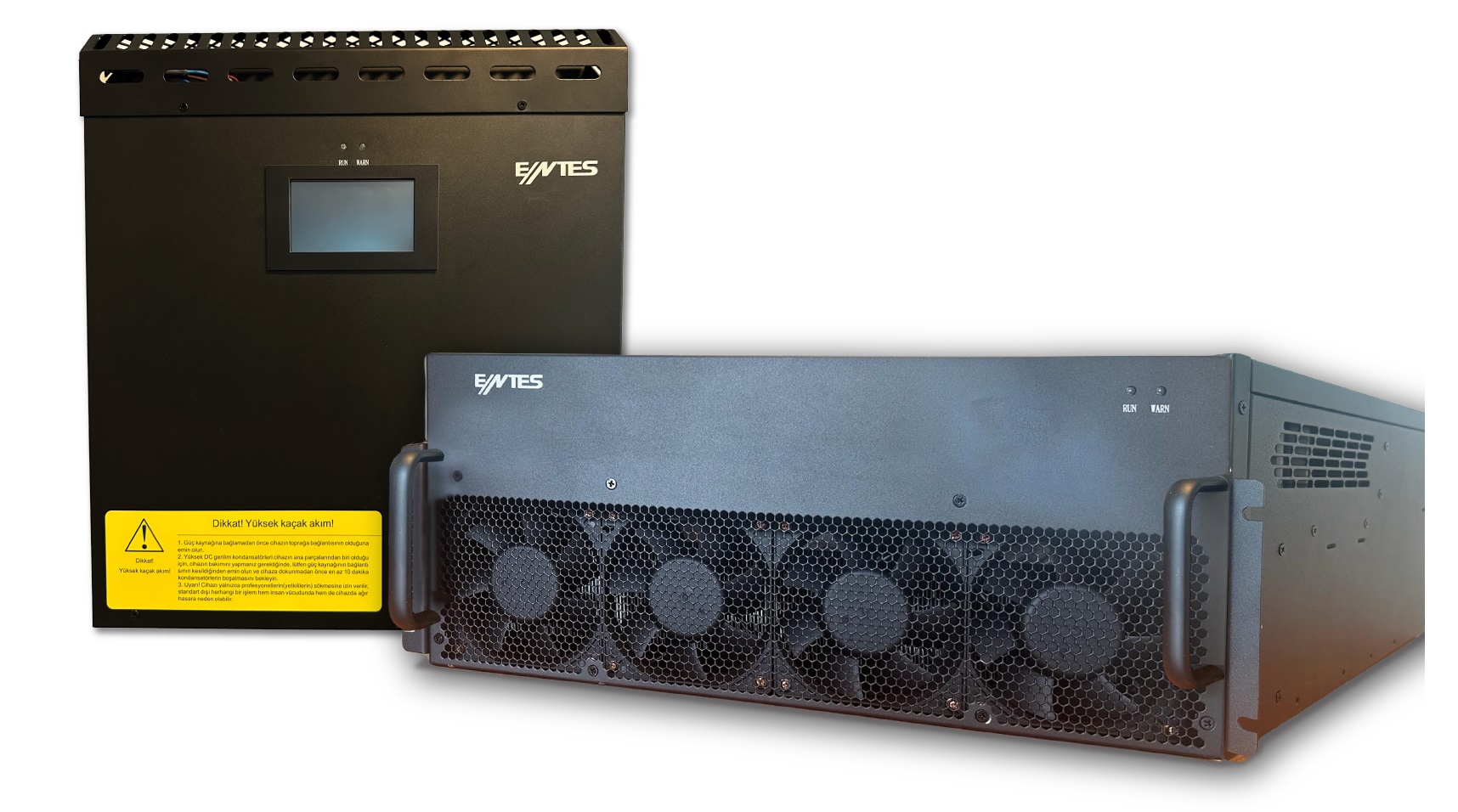
Capacitive or inductive losses occurring in businesses appear as costly reactive penalties for businesses. You can avoid reactive penalties related to SVG and at the same time prevent the waste of national resources. You can also extend the life of electronic devices in businesses by ensuring they work correctly and at full efficiency.
Phase imbalance in three-phase systems not only increases neutral current but also causes uneven thermal stress on transformers and distribution cables. Persistent imbalance reduces transformer efficiency and accelerates insulation aging. By dynamically redistributing reactive current across phases, SVG units help equalize load distribution. Lower neutral current reduces conductor heating and minimizes fire risk in heavily loaded distribution boards. From an operational perspective, this translates into longer asset life and fewer unexpected thermal-related failures.
Low power factor increases the active energy losses of facilities and affects their stability. Typically caused by inductive or capacitive loads that require extra reactive power to operate properly. Other factors contributing to low power factor are harmonic currents produced by non-linear loads. With ENTES “Static Var Generator”, in addition to compensation and line balancing, you can also control the current harmonics of your business by suppressing up to the 13th harmonic. When the power factor decreases, this causes energy loss and reduced system efficiency. At this point, “Static Var Generators” are devices used to eliminate negativities and regulate the power factor in electrical systems by keeping the reactive power in balance.
Structural difference of Static Var Generators from classical compensation; In classical compensation; capacitor, reactor, shunt reactor, control relay etc. It can work without the need for devices. It is possible for companies that already have compensation panels and want to increase their current power to establish a fast, reliable and highly sensitive system with SVG in their new investment facilities. SVG, which is a device that requires minimum maintenance compared to other compensation systems, has a software infrastructure that allows it to quickly and easily adapt to classical compensation and work in harmony, which provides a great advantage to the users.belongs to ENTES Static Var Generator It offers ease of installation thanks to its smaller dimensions than other products in the sector, and provides portability and ease of use with its more compact structure. In addition, ENTES Static Var Generator Series products provide flexible installation opportunities for users with wall and cabinet mounting options and internal display options. Additionally, features such as having a structure that can operate smoothly even at high temperatures make the product a more reliable and flexible option.
► Compensation: The SVG device provides reactive power compensation to increase energy efficiency. Thus, system performance is maximized while energy costs are reduced.
► Line Balancing: Increase the reliability of your energy system with high performance line balancing capability. It minimizes energy losses caused by imbalance and optimizes energy quality. In addition, as a result of line balancing, it reduces the neutral current, which is the main cause of many fires in businesses.
► Suppression up to the 13th Harmonic: Thanks to its advanced harmonic suppression feature, it improves energy quality by suppressing distortions up to the 13th harmonic. This provides a more stable flow of energy and protects your critical systems.
Both capacitive and inductive compensation at the same time, 100% line balancing, easy and fast installation, low maintenance cost, increased energy efficiency, compact structure, suppression features up to the 13th harmonic, uninterrupted monitoring with an energy doctor, 4.3 inch internal screen and 7 inch external screen support (parallel connection up to 8 modules) are the prominent features of the ENTES Static Var Generator. In addition, ENTES Static Var Generators offer different software and installation solutions for MV reference LV compensation and applications where the transformer and compensation panel are at long distances (e.g. Solar Power Plant).
ENTES Static Var Generator SeriesAs IGBT-based power electronic devices, it is an innovative product developed to solve the reactive power problems of businesses. Reactive power can lead to high penalty costs, energy losses and decreased efficiency in businesses. ENTES Static Var Generator Series helps increase your energy efficiency by eliminating these problems.
ENTES Static Var Generator Series is designed to meet the reactive power needs of businesses with various models with different capacities. Each model helps you increase your energy efficiency by offering the most suitable solution for your needs.
Below ENTES Static Var Generator Series You can find products:
► ENT.SVG 30 kVAr
► ENT.SVG 50 kVAr
► ENT.SVG 75 kVAr
► ENT.SVG 100 kVAr
These products are ideal options to reduce your business’s energy costs and increase efficiency.
Definitive Solution to Reactive Power Problems
Reactive power increases operating costs by causing energy losses in electrical systems. ENTES Static Var Generator Series has the feature of compensating for both inductive and capacitive powers at the same time. Thanks to its IGBT-based structure, it has an extremely fast response time and reacts in 50 microseconds, performing full sine correction in under 10 milliseconds. This feature provides a great advantage, especially in businesses where loads are switched on and off very quickly, such as spot welding and iron and steel facilities.
Fast Compensation and Harmonic Filtration
ENTES Static Var Generators not only provide compensation, but also offer 100% line balancing and the ability to suppress up to the 13th harmonic. In this way, it solves many complex problems in your business on its own. Since the capacitors used to compensate for inductive loads are not included in this system, the devices do not create any harmonic effects while operating.
Modular Structure and Easy Installation
ENTES Static Var Generators provide a great advantage for businesses with their modular structure and easy assembly. Thanks to the ease of parallel connection, the system can be scaled according to your needs. The fact that it does not contain components such as capacitors and contactors provides ease of maintenance and eliminates the regular maintenance requirements of traditional compensation systems. In this way, you save time and costs.
ENTES Static Var Generator Series stands out with the following advantages:
► Energy Efficiency
► Neutral Current Drop
► Line Balancing
► Fast Compensation
► Filtering up to 13th Harmonic
► Ease of Maintenance
► Easy and Flexible Installation
Response time and control algorithm quality define the practical effectiveness of an SVG installation. Modern systems employ high-speed digital signal processors (DSPs) to analyze voltage and current waveforms, perform instantaneous reactive power calculations (often based on p–q theory), and generate precise switching commands. The accuracy of current sensing, sampling rate, and control loop stability directly influences compensation precision. In large industrial networks with fluctuating loads, algorithm performance becomes as important as hardware rating. Reactive power control is no longer a passive correction method; it is an actively managed real-time process.