

Wireless energy transfer, one of the most remarkable innovations of today’s technology (Wireless Power Transfer – WPT) breaks new ground in terms of mobility, aesthetics and ease of use without the need to connect devices to sockets. A world free of cables no longer belongs only to science fiction movies; WPT has begun to be widely used in many fields, from consumer electronics to automotive, from medicine to the defense industry. This technology, which enables the transfer of energy from one transmitter to another receiver without a physical cable connection, was shaped by experiments whose foundations were laid by pioneers such as Michael Faraday and Nikola Tesla in the 19th century. Today, this technology is mature enough to be integrated into commercial products, international standards and even city infrastructures. Especially with the widespread use of standards such as Qi and the development of electromagnetic compatibility (EMC) standards, the security and efficiency of wireless energy transfer are rapidly increasing.
The concept of wireless energy transfer dates back to pioneering scientific studies conducted in the 19th century. Efficiency in wireless power systems is strongly influenced by coupling coefficient and quality factor (Q) of the coils. The coupling coefficient depends on distance, alignment, coil geometry, and magnetic shielding. Even small lateral misalignments can significantly reduce transferred power in tightly coupled inductive systems. High-Q resonant circuits, on the other hand, store more reactive energy and can sustain stronger magnetic fields with lower input current. But there is a trade-off. Extremely high Q values narrow the bandwidth, making the system more sensitive to frequency drift caused by temperature changes or component tolerances. Designing a stable WPT system is therefore a balancing act between robustness and peak efficiency.
Michael Faraday He discovered the principle of electromagnetic induction in 1831, laying the foundation for the idea that energy could be transferred wirelessly. Behind Nikola TeslaHe conducted experiments on wireless energy transfer in the 1890s and showed that energy could be transported over long distances using high-frequency electromagnetic waves. developed by Tesla Tesla Coil and trying to build Wardenclyffe Towerare some of the most iconic projects on wireless electricity transmission.
This concept developed throughout the 20th century, especially in the context of military communication systems and satellite technologies. Since the 2000s, with the development of resonance-based wireless energy transfer systems, the technology has found a wide range of use, from consumer electronics to the automotive industry. Today, the legacy of this pioneering work is actively pursued in many applications, from low-power devices to electric vehicles and medical implants.4
Magnetic Inductive Matching
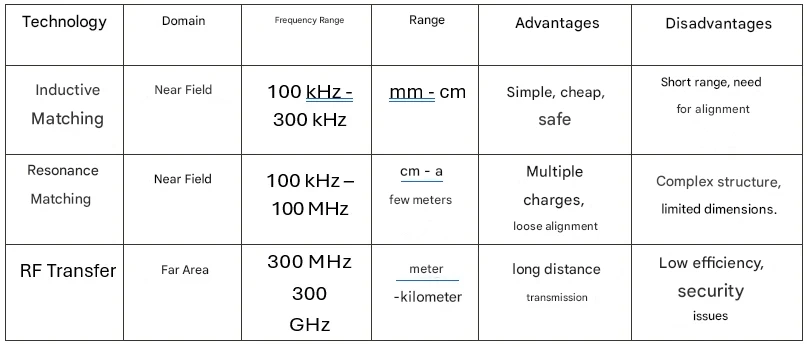
Magnetic inductive coupling, the most basic method of WPT systems, ensures energy transmission by creating an electromagnetic field between two coils. In this method, based on the transformer principle, the primary coil creates a magnetic field with alternating current, and this field is converted into electric current by the secondary coil in close proximity.
Advantages: Simple structure, low cost and safe effect on human health.
Disadvantages: Tight alignment required for high efficiency and very short range (a few mm – cm).
Foreign object detection (FOD) is a critical safety mechanism in practical inductive charging systems. Metallic objects placed between transmitter and receiver coils can absorb induced currents and heat up unintentionally. To prevent this, modern controllers continuously monitor changes in reflected impedance and power transfer characteristics. If abnormal losses are detected, the system reduces power or shuts down entirely. What appears to the user as a simple charging pad actually contains real-time impedance tracking algorithms and thermal management strategies operating in the background.
This technology is most commonly on wireless chargers is used. Smartphones and wireless charging stations work with magnetic inductive coupling method. When the charger and the phone are aligned correctly, energy transfer occurs thanks to the electromagnetic field created between them. In this way, users can charge their phones by simply placing them on the charging surface, without using cables.
Resonant systems introduce additional electromagnetic compatibility challenges. Because they operate at specific resonant frequencies with stronger oscillating fields, unintended emissions can couple into nearby electronics. Shielding strategies, ferrite materials, and careful coil placement are required to confine magnetic flux paths. In electric vehicle charging applications, for example, stray field limits must comply with international exposure guidelines. Achieving high power transfer—often in kilowatt ranges—while maintaining field containment requires precise electromagnetic simulation during the design phase. Field distribution is engineered, not guessed.
Magnetic Resonance Coupling
In resonance matching, which is an improved version of the inductive method, both the transmitter and receiver are tuned to the same resonance frequency. In this way, highly efficient energy transfer is possible in looser alignment and over longer distances.
RF-based wireless energy transfer is fundamentally different from near-field inductive methods because it operates in the far field. Power density decreases rapidly with distance according to the inverse square law, which explains the low efficiency over long ranges. Directional antennas and beamforming techniques can partially compensate by focusing energy toward the receiver. However, precise alignment and tracking systems are then required. Atmospheric absorption, multipath reflections, and regulatory power limits further constrain usable output power. In most real deployments, RF WPT is optimized for microwatt or milliwatt-level devices rather than high-power applications.
Advantages: Multi-device charging, loose alignment tolerance, high efficiency.
Disadvantages: More complex circuit design and space requirement within the device.
IEEE Power Electronics (2024) According to the study, resonance-based systems offer more stable performance, especially in non-constant load scenarios such as electric vehicles and medical implants.
Transmission via Radio Frequency
This method is a technique that uses electromagnetic waves and allows energy transmission over long distances (a few meters – kilometers). Especially RF energy harvesting Low power devices can be powered remotely.
Advantages: Long range energy transfer.
Disadvantages: Low efficiency, high risk of RF exposure, line-of-sight requirement.
RF energy transfer, in smart city infrastructures It is especially widely used for low-power devices such as sensors and monitoring systems. For example, air quality monitoring sensors integrated into a city can operate by harvesting energy via RF. These sensors can receive energy even over long distances, making the use of cables unnecessary and reducing maintenance costs. However, due to the possible health effects of RF exposure, regulatory attention is required for such systems.
Nature Electronics (2025) In his publication, RF systems are especially critical for sensors with low power consumption; However, it is emphasized that regulations should be tightened regarding its effects on human health.
Wireless Device Charging
Many portable devices, from smartphones to laptops, now support wireless charging compatible with the Qi standard. Wireless Power Consortium (WPC) Developed by Qi standard, it operates in the frequency range of 105–205 kHz and can go up to 200V. Qi technology offers three different docking methods: guided alignment, free alignment with moving coil, and free insertion with multiple coil arrays. Thanks to these methods, devices placed on the charger can be charged comfortably without any necessity for alignment. While wireless charging technology is rapidly becoming widespread in smartphones, the fact that this also applies to larger devices (laptops, tablets, etc.) has greatly improved mobility and user experience.
Electric Vehicles (EVs)
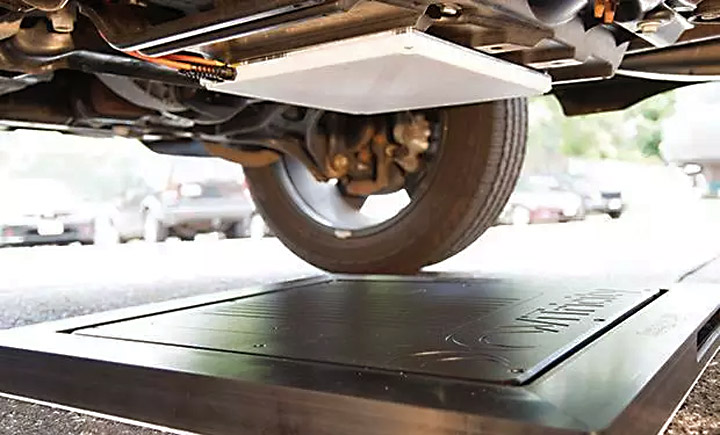
Wireless charging systems developed for electric vehicles provide great convenience to drivers, especially by being integrated into parking infrastructures. However, technical difficulties such as the alignment problem between the vehicle and the transmitter and the decrease in efficiency in high-power transmission are still waiting to be overcome. It is not yet common in our country.
RFID Systems
RFID (Radio Frequency Identification)It has an important place in areas such as object tracking and inventory management. RFID systems work in two types: passive and active. Passive RFID tagsIt receives energy by working with the electromagnetic signal coming from outside, thus keeping the energy need to a minimum. Passive tags are widely used, for example, in tracking products used in logistics or in payment systems in the retail industry. Active RFID tags They produce energy on their own by containing batteries and can transmit signals over longer distances. Wireless energy transfer provides a great advantage, especially in meeting the energy needs of passive tags. Thanks to this technology, it is possible for RFID tags to operate for a long time without losing energy. In addition, the areas where these systems will be used are gradually expanding, for example, stock control, animal tracking and automatic crossing systems.
Medical Implants
Medical implants, especially devices such as pacemakers and cochlear implants, are of great importance for improving patient quality of life. However, since these devices may run out of battery life over time, they usually require battery replacement through surgical intervention. This can create additional risks and health problems. Wireless energy transfer technologyIt ensures continuous charging of implants without the need for surgical intervention.
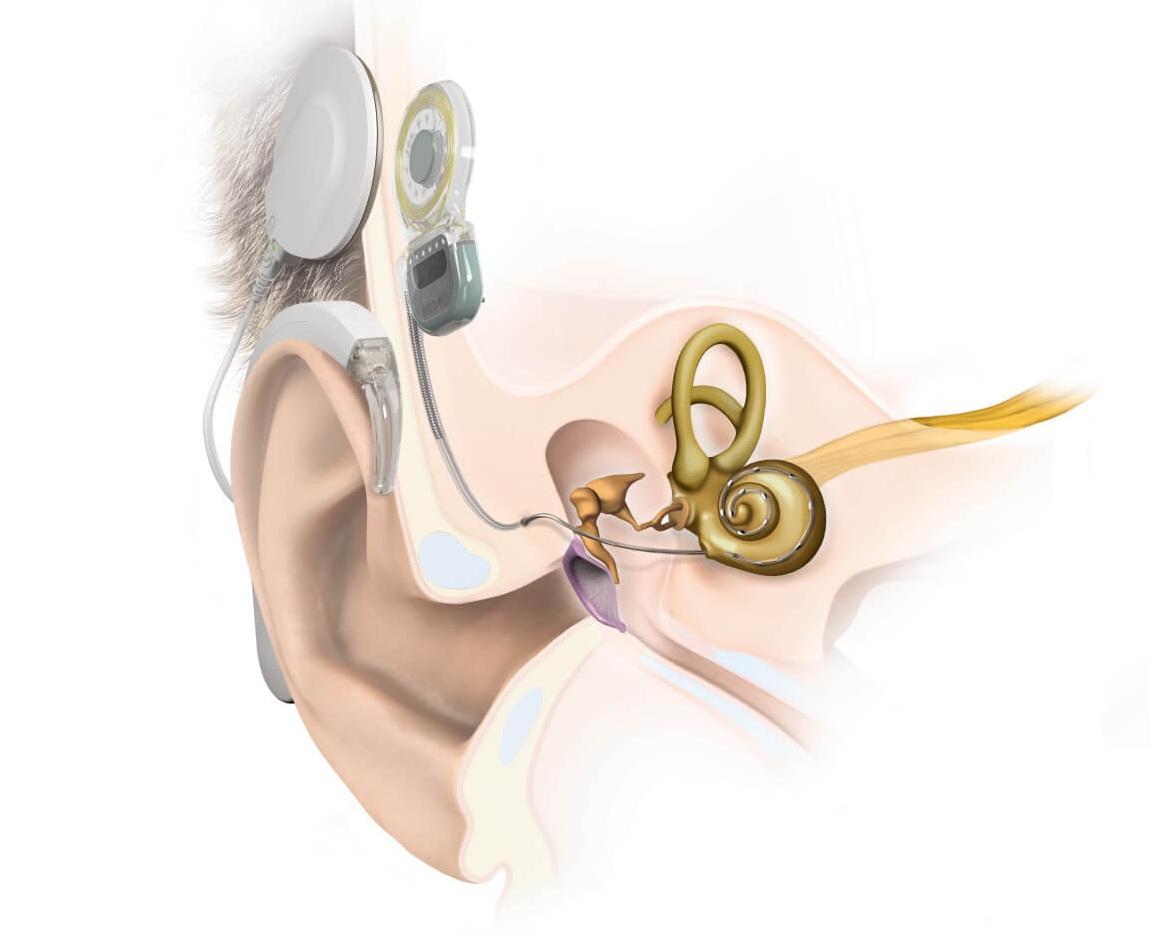
For example, in cochlear implantsEnergy is transferred from the external microphone and transmitter system to the inner ear receiver by magnetic induction. In this way, the patient does not have to go to the hospital regularly and his quality of life improves significantly. Such wireless charging applications have gained an important place among technologies that improve the health of patients, especially while reducing the need for remote monitoring and maintenance.
Thermal management is an often overlooked aspect of wireless charging systems. Even with 85–95% efficiency in optimized inductive systems, the remaining losses convert directly into heat within coils, ferrite cores, and power electronics. In compact consumer devices, limited surface area restricts passive cooling options. Elevated temperatures not only reduce component lifespan but also shift resonant frequency due to changes in inductance and capacitance values. Active thermal monitoring, adaptive power control, and material selection with stable magnetic properties across temperature ranges become essential for maintaining long-term reliability. Wireless convenience depends heavily on invisible thermal discipline.
Challenges and Future Perspective
Wireless energy transfer faces some significant challenges:
Device miniaturization: In portable devices, the space occupied by circuit elements can be a major obstacle.
Productivity: Serious energy losses may occur, especially in long distance applications.
Safety and health effects: Due to RF exposure limits, necessary precautions should be taken and careful monitoring should be done in both medical and consumer electronics applications.
With this, multi device charging, dynamic vehicle charging (charging on the go) and Implants compatible with biological systems It is anticipated that topics such as these will be at the center of WPT research in the coming years.
Wireless energy transfer has ushered in a new era in the world of technology by exceeding the limits of classical wired systems. The advantages it offers, especially in terms of mobility, hygiene, aesthetics and user experience, cannot be ignored.
The three basic technologies developed (inductive, resonance and RF) have diversified according to different application needs and are supported by international standards such as Qi. However, reaching the full potential of this technology will be possible with further research on topics such as efficiency, security and cost.