

Energy Harvesting in Cities: Cities are not just buildings, roads, and bridges. They are living, breathing, and constantly moving organisms. Millions of people walk the streets every day on their way to work, school, and shopping; vehicles wear down the roads; and public transportation systems cover thousands of kilometers. But does this movement only provide transportation? No! All this movement actually has a much greater potential: energy production. Today, with the concept of “energy harvesting,” we can convert the movement that occurs in the daily life of cities into electricity. In other words, every step we take, the passage of a car, or even the opening and closing of a door can be transformed into an energy source. Let’s examine this technology, its examples around the world, and possible future developments in detail.
What is energy harvesting?
Energy harvesting is the process of collecting energy forms that already exist in our environment but are often wasted—such as heat, light, vibration, and motion—and converting them into usable electrical energy. In addition to well-known methods like solar panels and wind turbines, micro-energy sources have gained significant attention in recent years.
Energy harvesting in cities is primarily based on kinetic energy. That is, the kinetic energy generated by people walking, vehicles passing, or systems operating is converted into electrical energy through specialized systems.
Generating Energy from Pedestrian Crossings
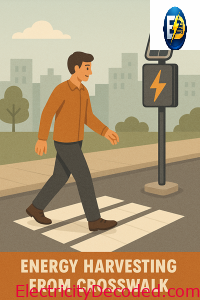
In various cities around the world, piezoelectric and kinetic energy harvesting systems integrated into pedestrian crossings convert every step into energy. For example, the Pavegen system installed at West Ham Station in London converts people’s footsteps into electrical energy to power the station’s lighting. This 10-square-meter area also powers nearby streetlights and Bluetooth transmitters by converting pedestrians’ footsteps into electrical energy. Furthermore, this system amplifies background sounds, such as bird songs, to provide visitors with a more peaceful atmosphere.
So what lies at the heart of this technology?
What are the details of Hydraulic or Mechanical Systems: Small generators that rotate using step force or compressed air systems can generate electricity.
How does Energy Storage and Use work: The energy produced is usually directed directly to charging stations, streetlights, or traffic lights. Thanks to energy storage units, the energy collected during the day can be used at night.
Generating Energy from Traffic Lights
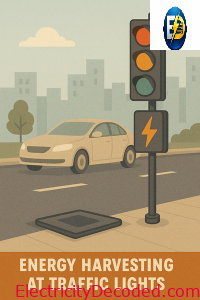
The kinetic energy generated by vehicle movement is no longer wasted. These systems focus on the high vehicle traffic and kinetic energy potential at traffic light locations. Thanks to speed bumps and specially designed road surfaces, the energy generated during vehicle passage can be collected to power systems like traffic lights and streetlights.
While converting kinetic energy into electrical energy might seem like a difficult process, it’s actually quite simple and easy with today’s engineering capabilities. A few procedures and instant electricity generation. Sounds great, doesn’t it?
So how does the system work?
Special surfaces placed at traffic points detect the pressure and kinetic energy generated by vehicle passage and convert it into electrical energy. The resulting energy can be used in the following areas:
Operating traffic lights
Powering streetlights
Operating sensor-based access control systems
The main technologies used are:
► Piezoelectric surfaces: Generate electricity from the pressure created by the weight of vehicles.
► Hydraulic systems: Operate generators using compressed air or liquids during passage.
► Magnetic systems: Generate energy through the interaction of metal parts of vehicles with magnets.
So, what are some examples of this field in the world? Let’s take a look at how energy is converted and in what unexpected ways it is used in our lives.
As you can see, we can generate electricity for free in a few ways; it only requires some initial investment. Although this investment may seem tiring at first, in the long run it will significantly ease the burden on the public and the state budget. This article isn’t about explaining the importance of electricity and how central it is to our lives today, but if you request it in the comments, we can create a detailed article for you.
New Energy Technologies (USA) and the Roanoke Example
Energy Generation Through Vehicle Slowdown: The US-based company New Energy Technologies is attracting attention with its innovative solutions in the field of energy harvesting. The system, particularly implemented in Roanoke, Virginia, leverages the advantages of urban traffic congestion to open doors to environmentally friendly and sustainable energy production.
In the area where the system is installed, vehicles naturally slow down as they approach traffic lights. During this slowdown, vehicles pass over special road plates installed instead of traditional asphalt. These plates are pressed downwards by the weight of the vehicles. This seemingly simple movement hides a highly efficient energy conversion process.
The downward movement of the plates is detected by mechanical energy converters located beneath the system, and this mechanical movement is converted into electrical energy. The generated energy can be used instantly in nearby traffic lights, informative digital signs, or streetlights. In this way, a portion of the city’s infrastructure energy needs is met by a simple stop-and-go vehicle movement.
(Note: The last sentence about the Sainsbury’s supermarket car park in Gloucester, UK, is unrelated to the preceding text and appears to be a separate, misplaced sentence.)
One example of pioneering innovative energy solutions in the UK has been implemented by Sainsbury’s, one of the country’s leading supermarket chains. This project, implemented at the chain’s Gloucester branch, takes a significant step towards sustainability by combining the traditional shopping experience with energy production.
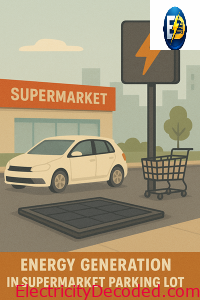
Sainsbury’s installed specially designed road plates in the branch’s car park. These plates collect the kinetic energy generated by the weight and movement of vehicles as they enter or exit the car park. This means that every customer, when they come to shop, not only shops but also contributes, albeit in a small way, to an energy production process.
The plates detect this mechanical pressure and convert it into electrical energy. The generated energy is used directly to operate the cash registers inside the supermarket. In this way, energy is utilized efficiently and directly without leaving its source.
Our Steps Are Turning into Energy
Turning urban mobility into energy is a major step towards a sustainable future. Every step, every vehicle passage, is no longer just movement; it’s also a source of energy. With the widespread adoption of these technologies, cities will become greener, more sustainable, and smarter.
So, what does the future hold for us? Where will energy production in cities lead?
Perhaps soon we will live in a world where every step we take not only takes us from one place to another, but also illuminates cities. The cities of the future will not only produce energy, but also share it with their inhabitants.
Doesn’t such an easy life excite you? While you go about your daily life, you can also generate electricity, saving on your bills and even charging your phones while walking.