

Thermal behavior inside low voltage panels is not only related to ambient temperature but also to enclosure design and internal power density. As current increases, I²R losses in busbars, cable connections and switching devices generate additional heat. If proper thermal dissipation is not ensured, localized hot spots may occur, especially at connection terminals and breaker contact points. These hot spots accelerate insulation aging and may lead to contact resistance increase over time. Therefore, correct busbar sizing, adequate spacing between components and proper ventilation channel design are critical in maintaining thermal stability.
According to the IEC 61439-1 standard, environmental conditions for low voltage panel systems are a very important factor for the safe and efficient operation of the system. These conditions are classified under three main headings:
► Normal Working Conditions
► Special Working Conditions
► Transport and Storage Conditions
Normal Operating Conditions
According to the IEC 61439-1 standard, low voltage panels are generally designed to operate at temperatures between -5°C and +40°C, with an average temperature not exceeding +35°C. Relative humidity can be 50% at +40°C and up to 90% at lower temperatures; but condensation should not occur. Panels should be installed in places not exposed to dust, moisture, corrosive gases and direct sunlight, and at an altitude not exceeding 2000 meters.
Under these conditions, the system generally operates smoothly within a certain temperature range and at certain humidity levels. Facilities that exemplify normal working conditions include shopping malls (shopping malls), office buildings, hospitals, housing and residence projects, and schools.
In coastal or high-humidity regions, condensation risk becomes one of the most critical threats to panel reliability. Even if relative humidity remains within acceptable limits, rapid temperature changes between day and night can cause internal condensation. Moisture accumulation on live parts reduces insulation resistance and increases the risk of tracking or flashover. To prevent this, anti-condensation heaters, humidity-controlled thermostats and proper IP-rated enclosures should be considered. Additionally, corrosion-resistant coatings and stainless-steel hardware significantly extend service life in aggressive environments.
Special Working Conditions
Altitude is another environmental parameter that directly affects panel performance. At elevations above 2000 meters, air density decreases, reducing its cooling capability and dielectric strength. Lower air density impairs heat dissipation and increases the risk of insulation breakdown under the same voltage level. In high-altitude installations, derating factors must be applied to switching devices and busbar systems. Manufacturers generally provide correction coefficients to ensure safe operation under reduced atmospheric pressure conditions.
Factors such as high humidity, dusty environments or chemical exposure may be considered special operating conditions. How panel systems will perform in such environments should be determined with appropriate design and precautions. Example facilities include petrochemical plants, mines, food production areas, offshore platforms and heavy industrial facilities. In these environments, the protection level of the panels should be increased, and material selection and insulation solutions should be suitable for environmental conditions.
Transport and Storage Conditions
These are the conditions that must be taken into consideration when transporting and storing panel systems. These conditions are specified to protect board components, avoid damage, and maintain system performance. For example, issues such as appropriate packaging and preventing vibrations during transportation are among the transportation and storage conditions.
Beyond fan-assisted cooling, passive thermal management techniques also play a major role in maintaining reliability. The use of ventilation grilles with dust filters, heat exchangers, or air-to-air cooling units allows internal heat to be transferred without exposing sensitive components to contaminated external air. In extremely hot environments, air conditioners designed specifically for electrical enclosures may be required to stabilize internal temperature. Proper cable routing inside the panel is equally important; organized wiring improves airflow and prevents heat accumulation around power components.
Temperature and Thermal Effects
Low voltage panels produce heat during the operation of the electrical equipment inside. This heat causes the temperature inside the panel to rise. High temperature can shorten the life of panel components, causing material fatigue and insulation deterioration. In addition, overheating reduces the current carrying capacity, increasing the risk of short circuit and endangering panel safety, increasing the risk of fire. In order to prevent these risks, the following issues can be examined.
► Measures to improve facility environmental conditions
► Precautions to protect board functionality
Measures to Improve Facility Environmental Conditions
Low voltage panels are used in different climatic zones and various temperature conditions. In order for these panels to operate safely and efficiently at the desired current values, it is important to keep the ambient temperature within certain limits. Because excessively high temperatures may cause the electronic components inside the panels to overheat and cause poor performance or even malfunctions. For this reason, the ambient temperature of the areas where low voltage panels are located in the facilities can be kept under control with air conditioning systems. In this way, the durability of the panels increases, the risk of failure decreases and the continuity of electrical systems is ensured.
Precautions to Preserve Board Functionality
Thanks to the fan-assisted cooling systems shown in Image 1, which will be integrated into the panel, hot air circulation is provided and the components operate at optimum temperature. This application also contributes to increasing the current carrying capacity of the panel.
By integrating temperature monitoring systems into the panel, as shown in Image 2, the indoor temperature can be monitored instantly. These systems provide early warning when specified threshold values are exceeded, allowing operators to intervene in time and prevent possible malfunctions in cases of extreme heat or cold that may occur due to climatic changes.
Humidity and Condensation
Humidity and condensation in low voltage panels are critical environmental factors that negatively affect the safe and uninterrupted operation of the electrical equipment inside the panel. Condensation refers to the transition of water vapor in the atmosphere from the gas phase to the liquid phase. This phenomenon usually occurs when the weather cools down. When the temperature drops in air with high humidity, water vapor condenses and forms liquid droplets. This situation not only causes the electrical insulation inside the panel to decrease and increases the risk of short circuit, but also paves the way for problems such as faulty measurements, indicator deviations and increase in contact resistance in the devices inside the panel.
Precautions That Can Be Taken Against the Effect of Humidity and Condensation
Humidity increases the risk of rust and corrosion on the metal surfaces inside the panel, causing connection points to deteriorate and electrical contact to weaken. Rusting and corrosion is the process of deterioration of metals as a result of environmental influences and chemical or electrochemical reactions. It usually manifests itself as loss of strength, color change, pitting and structural weakening on metal surfaces.
In order to minimize such negative effects, insulation can be applied to the busbar surfaces with plasto-elastic butyl rubber material, as shown in Visual 3. This application is especially preferred in marine vessels, offshore platforms and petrochemical, iron-steel and mining facilities where high humidity or chemical gases are present.
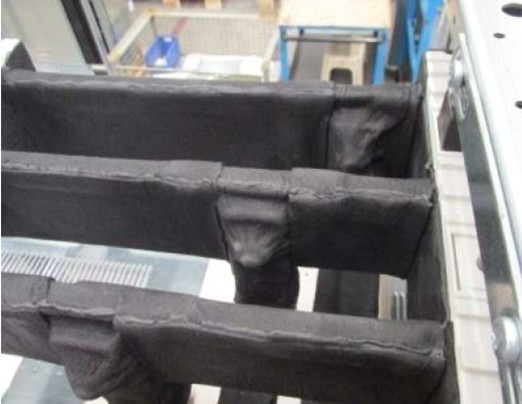
Image 3: Insulation application with plasto-elastic butyl rubber material
Tin plating of copper busbar surfaces is also a widely used method to provide additional protection against condensation and chemical effects. The tin plating process is generally carried out in accordance with DIN 50965 and DIN EN ISO 2093 standards. This coating prevents oxidation of copper, especially in humid and corrosive environments, and contributes to preserving conductivity and extending system life. This method increases reliability on electrical contact surfaces and reduces maintenance needs. Visual 4 shows the tin-plated busbar application inside the panel as an example.
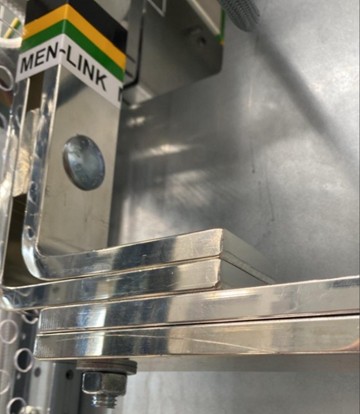
Image 4: Tin-plated copper application
Additionally, as seen in Visual 5, the indoor humidity rate can be kept below 60% by integrating a panel heater, a temperature-controlled thermostat and a hygrostat that controls humidity levels into the panel. In this way, the risk of condensation caused by temperature differences is reduced and the safety of the electrical equipment inside the panel is increased.
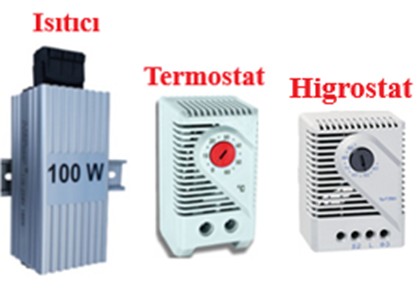
Image 5: Moisture prevention system
Dust, Dirt and Rain
Dust and dirt can reduce the conductivity of electrical contacts, increasing the risk of arcing. It can also negatively affect cooling performance by restricting air circulation.
If the environments where the panels are located are not adequately protected against rain, rainwater leaking into the system may cause arcing and serious malfunctions.
To prevent such risks, the IP (Ingress Protection) rating should be taken into account. This rating, determined according to the IEC 60529 standard, indicates the protection level of electrical and electronic devices against solid objects (dust, etc.) and liquids (water, etc.). The IP code is usually written in IPXY format:
► X: Indicates the level of protection against solid objects (dust, dirt, etc.) (between 0-6).
► Y: Indicates the level of protection against liquids (water, moisture, etc.) (between 0-8).
In Visual 6, you can find the table showing IP protection classes.
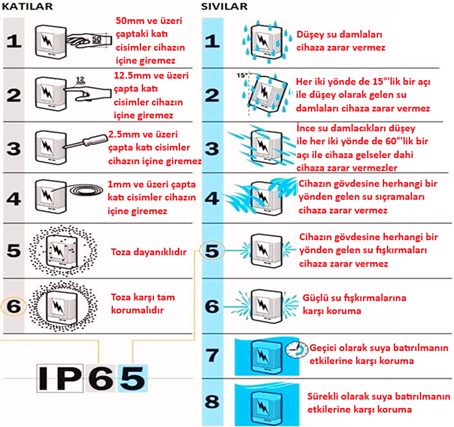
Image 6: IP (Ingress Protection) protection classes
Use and Benefits of Surge Arresters Against Lightning and Network Strikes
Sudden voltage increases may occur especially due to climatic events such as lightning strikes or grid-related shocks. In order to protect against such sudden voltage fluctuations, it is recommended to apply surge arresters (Surge Protection Device – SPD) to the panels. As seen in Figure 7, a surge arrester system integrated into the panel ensures the protection of sensitive equipment by safely transmitting sudden voltage increases such as lightning strikes caused by climatic conditions to the ground. Thus, the effects of the external environment are minimized, contributing to the uninterrupted and safe operation of the system. This method both reduces the risk of fire and extends the lifespan of electrical equipment by increasing its resistance to damage caused by climatic factors.
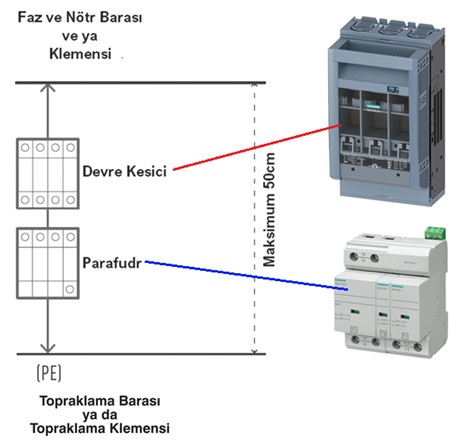
Selection, installation and classification of SPD devices, IEC 61643 It must be carried out in accordance with the criteria determined within the scope of the standard. This standard sets forth internationally accepted technical principles to ensure effective protection against overvoltages.
Regular thermal inspection is an effective preventive maintenance practice in low voltage panel systems. Periodic infrared thermography enables early detection of abnormal temperature rises at terminals, busbar joints and protective devices. Identifying such anomalies before they evolve into failures reduces downtime and prevents costly damage. Considering the increasing variability of climate conditions, combining robust design with predictive maintenance strategies ensures long-term operational safety and system continuity.
Conclusion
Low voltage panels play a critical role in the security and continuity of the electrical infrastructure. The performance of these boards is directly related not only to the quality of the internal hardware, but also to the environmental conditions they are exposed to. Normal, special and transportation-storage conditions determined within the framework of IEC 61439-1 standard; They are the main determinants of the lifespan, safety and efficiency of the panels.
Environmental factors such as high temperature, humidity, dust, chemical vapor and liquid contact can cause malfunctions, energy losses and security risks in panel systems. Therefore, not only electrical but also engineering solutions for climatic and physical conditions should be integrated in the panel design. Fan-assisted cooling systems, temperature monitoring sensors, hygroscopic heaters and thermostats, and IP protection class-compliant enclosures are among the effective methods for protecting the internal environment of the switchboard. In addition, the use of Surge Arrester (SPD) systems against lightning and network-related voltage surges extends the life of the devices and seriously reduces the possibility of failure.