

Transformers are stationary electrical machines that allow us to obtain different voltage and current values from the other windings at the same frequency and the same power by means of electromagnetic induction by applying the alternating voltage to one of the windings. Transformers are generally used in energy transmission and distribution. In addition, there are places where it is used in electronics.
If a time-varying current is passed through a coil of the transformer, a time-varying flux occurs in the core. Thanks to the magnetic conductivity of the core, this flux will also affect the other coil, and this flux will induce a variable voltage in the second coil. This is the transformer form. Three-phase transformers also work like single-phase transformers. It is formed by combining the cores of only three single-phase transformers with the same characteristics and connecting the primary and secondary windings in a star, triangle or zigzag manner. Although the calculations are made on a single-phase equivalent circuit, the concepts of power, current and voltage are calculated as three-phase, depending on whether it is star or delta connected.
Importance of Periodic Transformer Testing
Transformer tests are not only carried out during commissioning but also throughout the operational life of the equipment. Electrical, thermal and mechanical stresses gradually affect insulation structure, winding integrity and contact surfaces. Periodic testing makes it possible to detect insulation degradation, contact resistance increase or mechanical displacement at an early stage before a critical failure occurs.
Especially in medium and high-voltage systems, an unexpected transformer failure can lead to extended outages, costly downtime and safety risks. Therefore, condition-based maintenance supported by regular diagnostic testing plays a key role in ensuring system reliability and continuity of supply.
Some tests must be performed for periodic maintenance of a transformer. The highlights of these tests are as follows.
► Conversion Rate Test: It is checked whether the number of windings and turns ratios in the transformers are suitable for the project.
► Resistance Test: It is possible for the windings of transformers to lose resistance over time. It is desired that the values measured with this test be close to the values at the installation stage.
► Insulation Test: Insulation test, which is one of the basic electrical tests, is important for transformers. By making the necessary insulation resistance measurements, it is evaluated whether the transformer can operate safely.
► Grounding Test: Grounding test, which is also one of the basic electrical tests, should definitely be done for transformers and should not be neglected. If tension occurs where it should be neutral, a major security threat may occur. Therefore, as in every system and circuit, the grounding test must be carried out in detail in transformers.
► Thermal Test: This test is essential to prevent unwanted heat increases by looking at the internal connections, windings or any part of the transformer with thermal cameras. Early intervention can be vitally important.
► Impedance Test: By measuring the impedance of the transformer, we can see its resistance to fault currents. In this way, in a negative situation, we can solve the problem with early intervention and protect the system against possible dangers.
Thanks to Megger’s modern and easy-to-use solution for winding analysis of transformers: TAU3, you can perform periodic maintenance of your device in a much shorter time and more reliably. With its ability to perform true three-phase testing, it significantly reduces test time and number of connections. The device has a multi-test function with the ability to perform tests such as resistance, conversion ratio, current direction, impedance and more. Most importantly, all tests can be performed with a single connection. In this way, it allows you to save significant time.
Electrical and Diagnostic Test Categories
Transformer testing procedures can generally be grouped into three main categories:
1. Electrical Characteristic Tests
These include ratio, winding resistance and impedance measurements. Such tests verify whether the transformer operates according to its design parameters. Any deviation may indicate shorted turns, loose connections or tap changer issues.
2. Insulation Condition Tests
Insulation resistance and related dielectric measurements evaluate the health of the insulation system. Since insulation aging is one of the most common causes of transformer failure, these tests provide critical information about moisture ingress, contamination or thermal degradation.
3. Thermal and Mechanical Evaluations
Infrared thermal inspections and mechanical integrity checks help detect abnormal heating, vibration-related displacement or contact problems. Early detection significantly reduces the risk of catastrophic failures.
Megger and Advanced Transformer Diagnostics
Modern transformer analyzers simplify complex testing procedures by combining multiple measurement functions into a single platform. For example, the Megger TAU3 enables true three-phase testing with a single connection setup. This reduces human error risk while improving measurement consistency.
Integrated data storage and export functions (such as CSV or XML formats) also support digital maintenance strategies. Test results can be archived, compared with historical data and used for predictive maintenance analysis. This approach enhances asset management efficiency in power generation plants, distribution utilities and large industrial facilities.
Safety and Operational Efficiency
Accurate transformer testing contributes directly to:
-
Preventing unexpected outages
-
Extending equipment lifetime
-
Reducing maintenance costs
-
Improving overall power system stability
In modern energy infrastructure, transformer diagnostics are no longer limited to fault detection. They are part of a proactive reliability strategy aimed at ensuring safe and efficient energy distribution under increasing load demands.
TAU3 | True three-phase transformer analyzer for electromechanical testing of power, distribution and appliance transformers
In terms of ease of use, it not only has a single connection, is fast and has multiple test functions; In addition, it stands out with its smart user interface and automatic test sequences. In addition to having a durable, lightweight and portable structure in the field, its integration with data management systems (CSV, XML, DB) once again demonstrates its ease of use.
This device attracts the attention of important areas such as energy production and distribution companies, public infrastructure projects, and large industrial facilities; It makes a name for itself by providing a fast and safe solution by shortening maintenance time, detecting the risk of malfunction in advance and providing a fast and safe solution. Eliminating the need for multiple devices is just one of the most important features of the device. Additionally, it provides field efficiency to technical teams and offers intuitive use that reduces the risk of errors. Megger TAU3 True Three Phase Transformer Winding Analyzercontinues to perform very successfully in its field with the solutions it offers.
Highlights of TAU3:
► Ability to perform true three-phase testing: Reduces test time and number of connections.
► Multiple test function: Resistance, conversion ratio, impedance, current direction and more.
► All tests can be performed with a single connection.
► Easy to use with smart user interface and automatic test sequences.
► Integration with data management systems (CSV, XML, DB).
► Durable, lightweight and portable construction in the field.
The multi-functional TAU3 simplifies transformer testing with a one-time connection for all tests, reducing dependency on multiple devices and minimizing testing time, helping you maximize productivity for fast and accurate maintenance decisions.
TTRU1 is Megger’s newest handheld transformer turns ratio meter. The device provides significant convenience to the user with its compact, handheld and special design for field use. It weighs 1.7 kg TTRU1It can be said that it has the ability to test three phases at the same time and pushes the limits in terms of ease of use with its smart touch screen and simple interface. In this way, it greatly facilitates daily transformer control and maintenance tasks. In addition to ensuring correct connection with automatic connection detection, it also has a short circuit impedance measurement feature.
This device attracts a lot of attention, especially from companies and organizations that provide electrical maintenance services; It deserves the attention it receives with its practicality, portability and rapid testing opportunity. TTRU1 will continue to make a name for itself with its mobility and speed, which are perhaps the two most important issues for field technicians, and its automatic controls that increase test reliability and accuracy.
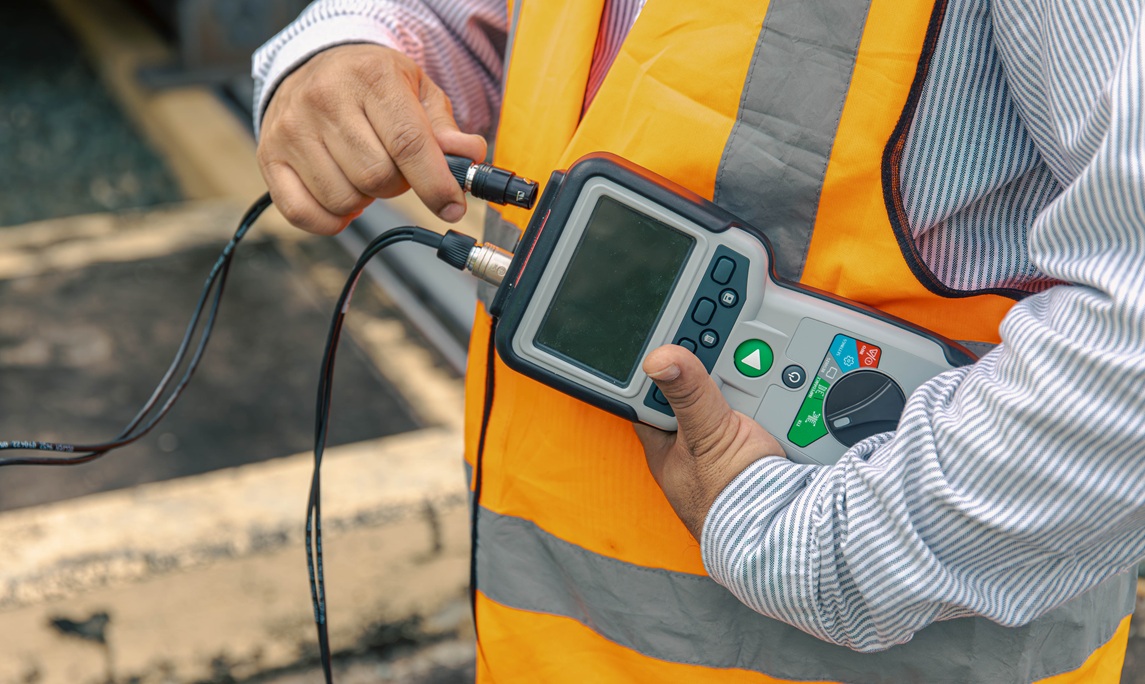
Highlights of TTRU1
► Compact, handheld and specially designed for field use.
► Correct connection alert with automatic connection detection.
► Can test 3 phases at the same time.
► Smart touch screen, simple interface.
► Light and portable: 1.7 kg.
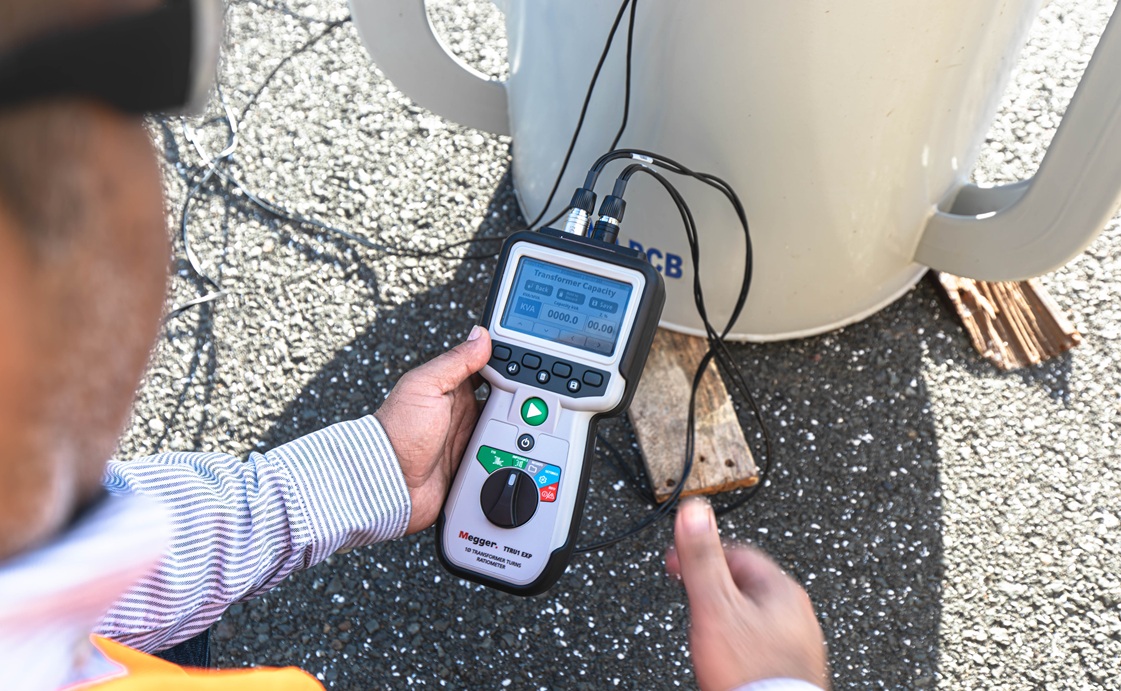
Easy-to-follow installation guided by color-coded cables, clamps, and customizable display vectors that match the transformer name tag under test ensures you get the right result the first time.
It is used to evaluate the condition of electrical insulation in transformers. DELTA4000 series It is an automatic 12 kV insulation power factor/tan delta test set. It is an effective test set thanks to the possibility of testing at low frequencies such as 1 Hz (for moisture and aging analysis) and test capacity up to 12 kV. It provides convenience to the user with its integrated voltage source and compact design. It stands out in terms of reliability with its advanced software, automatic testing and detailed data analysis solutions and compliance with IEEE/IEC standards.
In addition to these features, another important advantage is that it facilitates even tests that require expertise with the user interface. In addition, it detects moisture, aging and malfunctions precisely and provides early intervention in case of problems. Early detection of critical transformer insulation is an extremely important detail, and the DELTA4000 series is one of the most reliable solutions in the industry for in-depth analysis of transformer insulation.
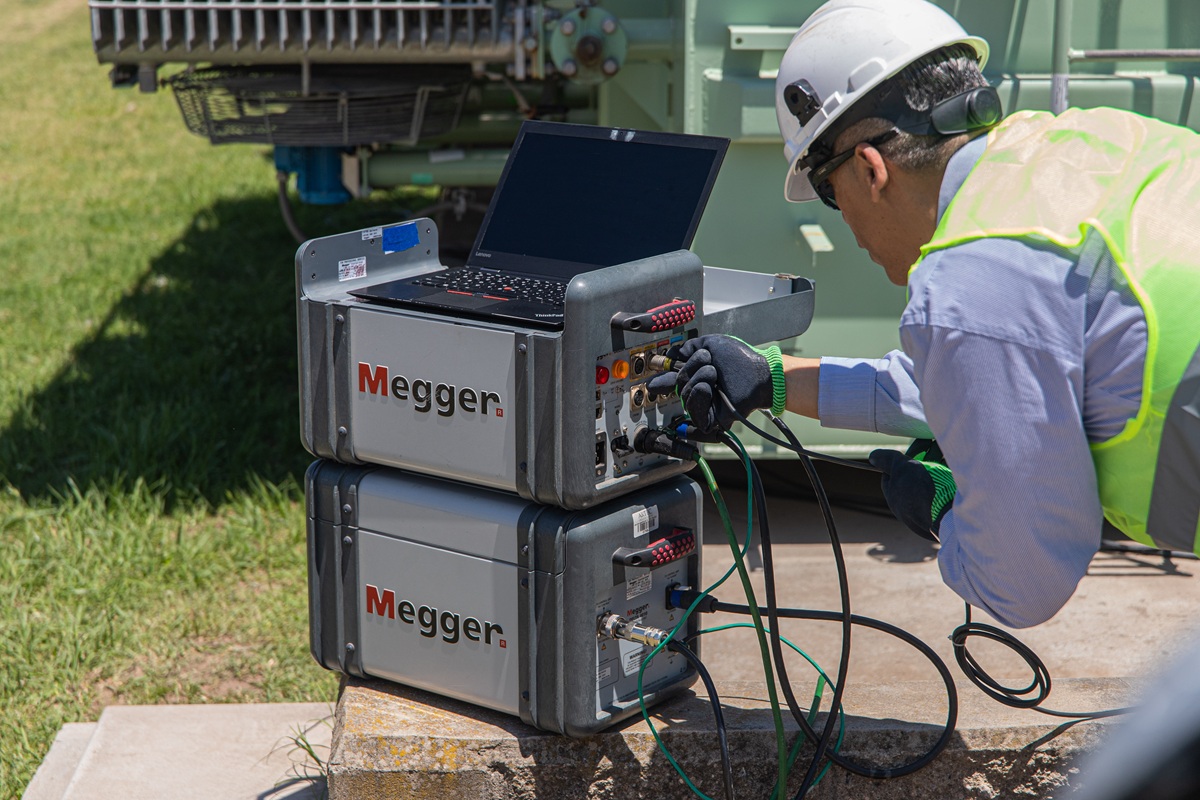
The high-power variable frequency design generates its own test signal regardless of line frequency quality, and the hardware design uses the latest available technology for digital filtering of the response signal. As a result, the DELTA4000 series produces reliable results and stable measurement values in the shortest time with the highest accuracy, even at substations with high interference.
Highlights of DELTA4000:
► Test capacity up to 12 kV.
► Integrated voltage supply, compact design.
► Automatic testing and detailed data analysis with advanced software.
► Compliance with IEEE/IEC standards.
► Possibility of testing at low frequencies such as 1 Hz (for moisture and aging analysis).